The Blog

On September 15, 2025 I spoke with Rob Berg a Missoula County Building Inspector.    He confirmed that a submersible pump needs to be on a  Ground Fault Circuit Interrupter (GFCI).   The objections have been that they create a nuisance trip and won't work unless they have a neutral.    Both of these statements are false!

 I have one, and it does not nuisance trip, and it does work on 240VAC with no neutral.

Also see National Electrical Code (NEC)  Chapter 6, Article 682.15 and 210.8. which states that electrical equipment installed in water requires a GFCI.

 Stay tuned, more info to come.  Bill


Is Lindbergh Lake's water Safe to Drink and can the water be
considered "potable" with a Nano-Ceramic Filter?

And

Why I'm not installing an Ultraviolet Disinfection System at this time.... if ever.


For those of us who live near a lake or draw water from a surface source, the idea of turning that clear mountain water into safe drinking water is appealing — and, in some cases, necessary. With the right filtration, it can be done. But does running your lake water through a nano-ceramic filter actually make it potable according to government standards?

Let’s break it down.

Nano-ceramic filters are designed with incredibly fine pores — often smaller than half a micron (0.5 µm) — which means they can physically remove bacteria like E. coli and other coliforms. Many also include a silver coating or other antimicrobial agents that inhibit bacterial growth on the filter surface. In theory, this makes them a great first line of defense against common contaminants found in untreated surface water.

However, “filtering” and “purifying” aren’t the same thing. To be considered potable — that is, safe to drink by U.S. Environmental Protection Agency (EPA) standards — the water must meet strict limits for microorganisms, chemicals, and other contaminants. The EPA’s Total Coliform Rule sets a zero-tolerance standard for coliform bacteria in drinking water. That means even a trace detection would classify the water as unsafe.

A nano-ceramic filter on its own may reduce bacteria dramatically, but unless the specific product has been independently tested and certified to meet recognized standards — such as NSF/ANSI Protocol P231 for microbiological purifiers — you can’t assume the filtered water will consistently meet potable standards. Viruses, for example, are often much smaller than the filter pores and can pass right through.  I will have it tested every so often.

For lake-source water, the most reliable approach is what water professionals call a multi-barrier system: start with a physical filter (like ceramic or carbon block) to remove sediment and bacteria, and follow it with a disinfection step such as UV treatment or chlorination.

However, because the power goes out here on Lindbergh Lake every so often I don't want to have to disinfect the system as instructed here:

Before service begins, all household plumbing lines should be disinfected to prevent the possibility of re-contamination after UV disinfection. You should also disinfect your plumbing system if the power goes out for several hours or more or if the unit has been accidentally shut off for several hours or more. It is advisable to disinfect the plumbing lines at least once a year. Disinfect after using the bypass as well. This combination ensures that anything small enough to slip past the Nano-Ceram filter is still neutralized before you drink it.   Also this caution:

pex_pipe.png

Finally, even the best filter can fail if it’s not maintained. Ceramic elements can crack, clog, or become re-contaminated if not cleaned properly. If you rely on a filter for drinking water, have the output tested periodically by a certified lab for total coliform and E. coli.

Bottom line: Nano-ceramic filters can greatly improve lake water quality and remove most harmful bacteria, but only independently tested systems and multi-step treatment can guarantee truly potable water. When it comes to what you drink, “almost safe” isn’t good enough.


 NanoCeram Filter by Argonide


  • NanoCeram is certified to reduce microbiological contaminants including Virus, Bacteria, and Cysts.
  • The "carbon filter" which I'm not getting,  has a very high affinity for taste, odor, and clarity of water, chlorine, herbicides, pesticides, trihalomethanes, MTBE, detergents, pharmaceuticals, organic chemicals, chemical compounds and many more low molecular weight contaminants.


NanoCeram Filter:  How the Filter works

I've been in contact with Gary to come up with a plan for my house, see below: 

Hi Bill,

I agree that the NanoCeram is sufficient to maintain bacteriostasis and that UV is not needed. You mentioned that the water source is pristine and there has been very little if any, gastrointestinal distress reported by the community.

Regards,

Gary Battenberg
Business Development Manager-Senio
Argonide Corporation
407-322-2500
407-488-7203 Cell
www.argonide.com

 pot.png


How to disinfect your house's pipes and water tank


The Mazzei injector application will yield better results because of the mass transfer efficiency of the hydrogen peroxide.   Bill, you have certainly done your homework, and I wish you all the best.


______________________________________________________________________________________________________________________________________________________


Bill,

There several differences between UV disinfectant and our ApaPure.

UV light systems have been known to be less effective because the water, carrying the bacteria, does not actually come in contact with the unit. This allows for bacteria to surpass the UV and remain in the water supply.

The ApaPure uses ceramic beads that touch contaminated water molecules carrying bacteria. The contact kills the bacteria.

Here is a link to the manufacturers of our ApaPure.  https://claire-technologies.com/technology/

Our filtration system uses granulated active carbon derived from coconut shells for maximum absorption of contaminants causing taste and smell issues in water. Please review the attach PDF on coconut shell GAC. We use a minimum of 47 lbs. of GAC to allow for the longest lasting, no maintenance filtration system. The system is certified for 2.2 million gallons of water, by NSF (National Sanitation Foundation) and WQA (Water Quality Association). There is also a sediment filter to trap the tiniest of particles such as sand and dirt.

Again, no filter changes and no maintenance is required. Most units are lasting 14-16 years, on average.


___________________________________________________________________________________________________________________________________________________________________

Bill, At normal injection levels, hydrogen peroxide won’t harm your septic system. It breaks down into water and oxygen long before reaching the tank. Hydrogen peroxide is generally considered "Septic safe". If you have other filtration like carbon, it will break down further. The only time to be cautious is during extremely high-dose shock disinfection, and this would only be an issue if the levels were hundreds of parts per million. —just avoid sending those flushes into the septic and direct out into the field. In some cases, it actually benefits the Aerobic bacteria by providing extra oxygen. 

 If you are using a Mazzi injector you will need to dilute any chemicals into large volume as the Mazzi pulls a lot of fluid and is not easy to regulate. This will require you to use your source water and pump to provide the water flow needed to create a suction "Venturi Effect". You also need to ensure that you can achieve a 25 to 30% pressure drop across the inlet and outlet side of the injector. This may be tricky in a residential setup due to backpressure native to tanks, filters, fixtures etc.  I have only seen these work for applications where the water was discharging into an open system like tanks or irrigation. I am interested to see how it works in your system. 

 Thank you,

David W Cannon, President
Cannon Water Technology
www.CannonWater.com
1 916 315-2691
QAL License 153744 Category P Microbial Pest Control


_______________________________________________________________________________________


Here is a video of the CONCEPT I'm going on for injecting Hydrogen Peroxide into the plumbing.

How to hook up a Injector and use

 Go to minute 4:00 and on.

My Lot is Unbuildable---Unbelievable!

When Rules Don’t Fit the Land: A Personal Story from Lot 38

By Bill Cory


I’d like to share a personal story—not to stir controversy, but to offer some perspective. It's a story about Lot 38, the long road to fairness, and why applying urban policies to rural landowners doesn't always make sense.

For years, I didn’t pay my LLHOA dues. And there’s a reason: I didn’t have a cabin on Lot 38. In fact, according to Missoula County at the time, I couldn’t build anything at all.

After I purchased Lot 38, I was informed it was classified as an unbuildable lot. I hadn’t known that when I bought it. Due to a Missoula County regulation, property owners with multiple lots couldn’t exceed 1,200 gallons of wastewater per acre across all their holdings. Since we owned three small lots totaling around 1.4 acres, that restriction made Lot 38 essentially unusable.

To make matters worse, I was told I couldn’t obtain water rights because of an ongoing lawsuit filed by the Avista Corporation in Spokane. The legal dispute prevented any new water rights from being issued during that period. So again—no building, no development.

Still, I tried to enjoy my property. I parked a trailer on the lot. But then came the phone call—from a Missoula County judge being properly ridiculous. I was told I couldn’t have a trailer, a tent, or even a campfire ring on Lot 38. Not only was I not allowed to build—I wasn’t even allowed to camp. And yet, I was still expected to pay property taxes. And according to the LLHOA spreadsheet from July 28, 2025, I was also still expected to pay LLHOA dues.

Imagine being told your property is unbuildable and essentially worthless, then being told you still need to pay taxes and association dues. It felt like I was being penalized for owning land I couldn’t use.

I share this because the spreadsheet listing me as “unpaid” during those years paints an unfair picture. It makes it look like I was simply negligent. But anyone in my shoes—faced with an unusable lot, legal barriers, and no recourse—would likely have made the same decision.

Thankfully, years later, things changed. The wastewater restrictions were lifted. I was able to obtain water rights. I began to invest in the property again, and I resumed paying dues.

My point is this: rules designed for city neighborhoods or dense subdivisions don’t always translate well to rural land ownership. When one-size-fits-all regulations are enforced without flexibility or context, they can cause real hardship. They can turn hopeful dreams of building a home into years of frustration and expense.

Also during this time period I lost my wife to cancer, had to leave my job to raise my then 3-year-old daughter, move back to Montana, and try to start a new.  It would be nice to know what hardships others here on LL are going through that they won't pay LLHOA dues!   Before we judge a neighbor based on a spreadsheet—or apply blanket policies that may not fit our landwe should take the time to understand the whole story.  

Those who don't pay to maintain the road are making those who do, pay more.   

Sincerely,
Bill Cory

Please go to the forum instead of emailing.   To prevent bots from scraping mass emails via LLHOA, it's better to use the forum for comments, etc.  
Here is the link: LLHOA Dues Discussion - Lindbergh Lake Community Forum

Featured


Just curious.....do the Lindbergh Lake folks want a neighborhood watch such as the Lindy Alert?  Should I keep this going for everyone or not?  Otherwise I'll just set it up for those that want it and delete everyone else from the Lindy Alert phone alerts.


Thanks

Hey, can I ask a favor?
I’ve been writing here for a while now, and I’d love to hear from you. What posts have you liked? What do you wish I’d cover more (or less)? Even a quick “hey, I read this” in the comments would make my day. Writing can feel a little one-sided sometimes — so if you’re out there, let me know.   Please create an account.

 Also:  Please go to the forum instead of mass emailing everyone.   By doing so you will prevent bots from scraping mass emails via LLHOA.   Therefore, it's better to use the forum for comments, etc.  
Here is the link: LLHOA Dues Discussion - Lindbergh Lake Community Forum


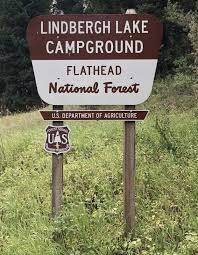
I will post the documentation I receive from USFS concerning the LL campground plans here.   I have not received any as of 7/17/2025. 

 I have been in contact with the USFS and will receive the documentation and plans once they are ready to post here at The Blog